
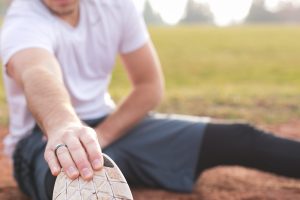
Balance is not simply a matter of having loose muscles or perfect posture. Flexibility work may address a particular movement limitation, but it does not replace strength, balance practice, or assessment of a new balance problem.
Start With the Task That Feels Difficult
Is the problem getting out of a chair, stepping onto a curb, turning, or feeling dizzy? These observations help determine the next conversation. Recurrent falls, new unsteadiness, or dizziness should be discussed with a healthcare professional rather than managed with an online stretch alone.
Tell your trainer about relevant restrictions and any advice from your care team. A fitness screen is not a diagnosis of why balance changed.
Make the Practice Environment Safe
Use stable support and clear floor space. A kitchen counter or solid chair may be appropriate; a rolling chair or an unstable surface is not a useful starting challenge. Arrange supervision when needed.
MedlinePlus describes supported strengthening and balance exercises. The level should fit the person. Do not close your eyes or stand unsupported on one leg simply to make an exercise harder when you are already at risk of falling.
Combine Appropriate Strength and Balance Tasks
A professional might select a supported sit-to-stand, heel raise, or stepping task. These are examples, not a complete prescription. The amount of hand support, movement range, repetitions, and rest should be chosen individually.
Compare the same task over time. Needing less assistance can be useful information, but do not remove support before you can do so safely.
Use Stretching for a Specific Reason
Ask which range of motion matters for your chosen activity. A suitable calf stretch, for example, addresses a different objective from practicing a controlled step. Stretching alone should not be described as recentering every joint or guaranteeing fall prevention.
Our stretching and mobility guide explains those distinctions. Pain or unusual symptoms are reasons to reconsider the movement, not force a deeper position.
Include the Wider Picture
Ask your healthcare team about other relevant factors, such as vision, footwear, medications, and home hazards. An exercise routine should complement that review rather than replace it.
For appropriate fitness coaching, explore 30-minute private training and book a Free Body Diagnostic at VIP Fitness Center, 1620 Lemoine Ave, Suite 2, Fort Lee — upstairs.