
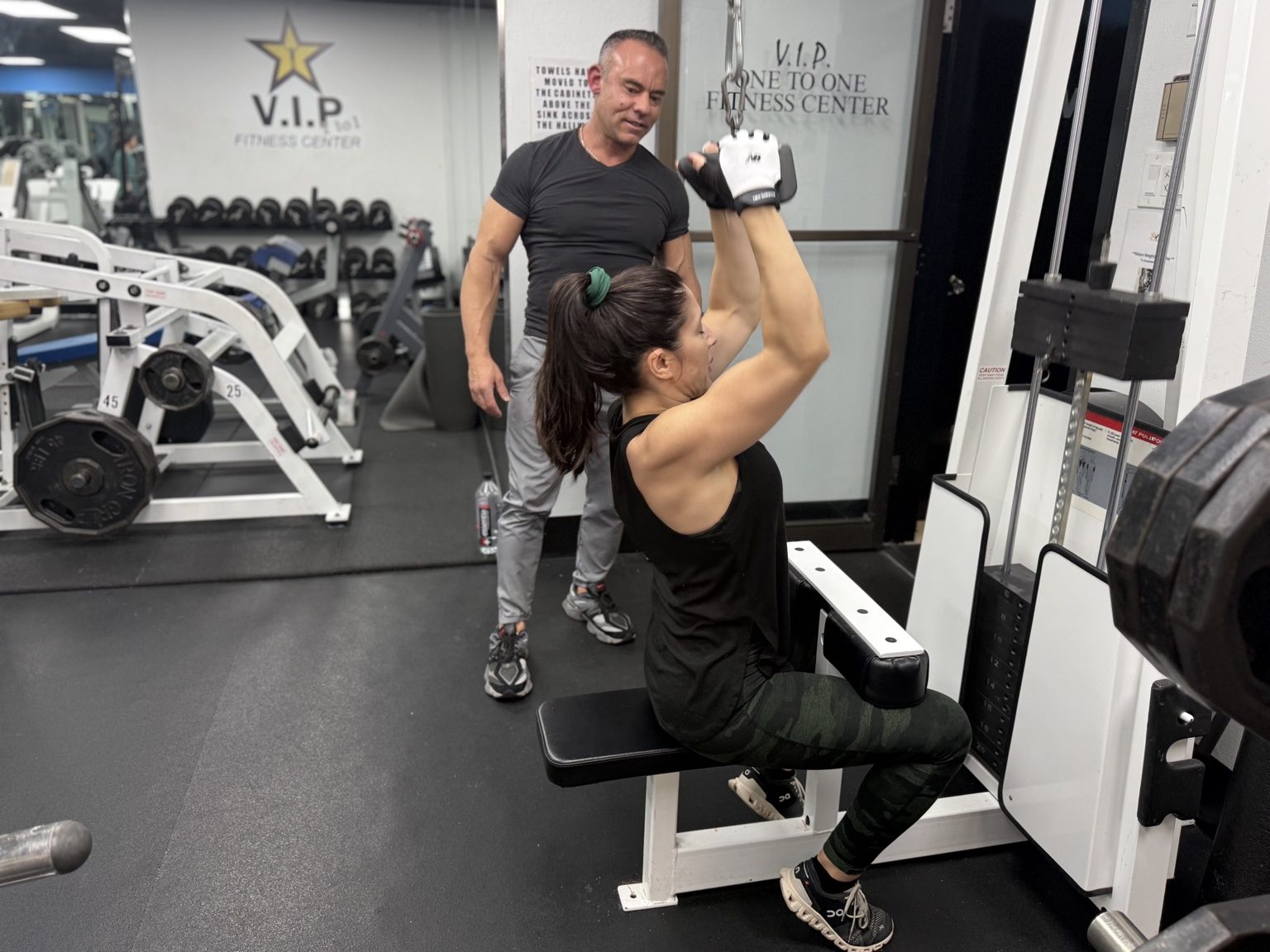
After your first month of personal training, you should understand your program better—not just know that the workouts made you tired. You should be clearer about what you are practicing, how the appointments fit your week, and what the next step will be.
The following four-week framework is a way to discuss the value of coaching. It is not a fixed VIP protocol or a promise of a particular physical transformation in 30 days.
Before the First Paid Session: Remove the Uncertainty
Clarify your main goal, relevant restrictions, preferred training times, and the package you are choosing. At VIP Fitness Center, ongoing private appointments last 30 minutes. The Free Body Diagnostic is a separate introductory consultation.
Ask how trainer matching and appointment coordination will work. You should know where to arrive, how to contact the team, and what the applicable booking terms are. Starting with clear expectations is better than trying to resolve basic questions between exercises.
Week One: Learn the Decisions Behind the Exercises
A useful first week introduces a manageable number of movements and explains their purpose. You should be able to ask how to set up, what a repetition should look like, and when to stop or request help.
Notice whether instructions make sense to you. Some people prefer a demonstration before trying the movement; others benefit from one cue at a time. Tell the trainer what helps you learn. Private coaching gives that conversation room to happen.
Our beginner strength-training guide covers the exercise-learning side in more detail.
Week Two: Check Whether the Schedule Works in Real Life
Compare the appointments you planned with the visits you completed. Did a particular time repeatedly conflict with work? Did travel take longer than expected? Those observations deserve a scheduling adjustment, not a judgment about your motivation.
Two scheduled sessions weekly create eight planned appointments across four weeks. Three create twelve. Neither count is a universal prescription. Use the training-frequency comparison to discuss the commitment that makes sense for you.
Week Three: Establish a Record You Can Compare
For selected exercises, record the version, resistance, repetitions, and a useful coaching cue. A label such as “leg day” does not tell you enough to understand what changed. Comparable records allow a more specific discussion than asking whether each workout felt harder.
For example, repeating the same row with better control may be useful information even when the weight stays the same. The next step could be another repetition, a modest resistance adjustment, or continued practice. It should have a reason.
ACSM’s resistance-training guidance emphasizes regular participation and matching training to individual goals. Complexity and exhaustion are not requirements for every productive session.
Week Four: Ask What We Keep and What We Change
A review should connect the records to your original goal. What became easier to understand? What remains difficult? Does the schedule fit? Is the exercise workload appropriate? Which measure will help evaluate the next phase?
A month is enough time to review the process; it is not a deadline for a particular body-fat change. Recognize useful learning and attendance while remaining honest about goals that have not yet changed.
What Would Be a Reason to Speak Up?
Ask questions when you do not understand the exercise, when the plan seems unrelated to your goal, or when the appointment arrangement is not working. New pain or concerning symptoms should also be raised promptly and may need healthcare assessment rather than a training adjustment alone.
You do not need to wait until your package ends to discuss a problem. Clear feedback gives the team a chance to address it while your plan is still taking shape.
Start With a Plan You Understand
Book your Free Body Diagnostic to discuss your goals and what you want from private coaching. The complimentary 30-minute consultation includes an InBody assessment and carries no purchase obligation.
Find VIP Fitness Center upstairs at 1620 Lemoine Ave, Suite 2, Fort Lee. Bring your preferred days and the questions that would make getting started easier.