
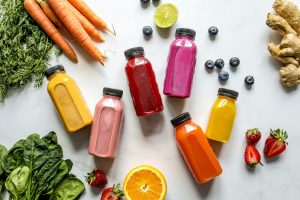
Children do not need juice to have a healthy diet. Whole fruit is generally preferred, and an organic label does not remove the need to consider portions, pasteurization, and age.
Use Age-Appropriate Guidance
The American Academy of Pediatrics recommends no juice before twelve months unless a clinician specifically advises otherwise. Its daily upper limits are four ounces for ages one to three, four to six ounces for ages four to six, and eight ounces for ages seven to eighteen.
These are limits, not targets children must reach. Discuss individual nutritional or medical needs with the child’s pediatrician rather than automatically adding juice.
Compare the Actual Product
Read the percentage of juice, serving size, added-sugar information, and ingredients. A fruit drink and a 100% juice product are different. Neither an organic label nor a vegetable in the ingredient list guarantees low sugar, adequate fiber, or a particular health benefit.
Tomato juice is not treatment for lead exposure. Do not use a juice product to address poisoning, dehydration, or a suspected deficiency.
Whole Fruit and Blended Fruit Are Different From Extracted Juice
Whole fruit includes its edible fiber and a different eating experience. A blender retains the ingredients you put in it, while a juicer usually separates some material. Homemade juicing does not automatically provide more fiber than store-bought juice.
Use age-appropriate pieces and textures. For a broader comparison, see our whole-fruit and juice guide.
Prioritize Safe Handling
AAP advises against unpasteurized juice for children. Refrigerated pasteurized juice can be suitable when stored correctly; it does not have to be shelf-stable to be appropriately treated. Follow the label after opening.
Fresh-squeezed and cold-pressed do not automatically mean safer. The CDC explains food-safety precautions for young children.
Avoid All-Day Sipping
Offer an appropriate portion with food rather than in a bottle or cup used to sip juice throughout the day. Avoid bedtime juice and do not use juice as a substitute for appropriate illness treatment.
The earlier suggestion that sugar inevitably makes children hyperactive has been removed; a parent’s beverage decision does not need that claim to be sensible.
Keep Adult Fitness Services Separate
VIP Fitness Center offers private exercise coaching in Fort Lee. Our Free Body Diagnostic introduces fitness options; it is not pediatric nutrition care or an indication that we provide childcare or a children’s program.