
Brian Hernandez

Brian Hernandez is the owner of VIP Fitness Center and a personal trainer in Fort Lee, New Jersey. He helps adults build practical fitness routines through 30-minute, one-to-one personal training, with an emphasis on appropriate exercise selection, clear coaching, steady progression, and consistency.

His articles explain how to choose a training program, understand fitness assessments, and make informed decisions about strength training, scheduling, and long-term progress. VIP Fitness Center's private training studio is upstairs at 1620 Lemoine Ave, Suite 2, Fort Lee.

Brian writes from an exercise-coaching perspective. His articles provide general fitness education, not medical diagnosis, treatment, or individualized medical nutrition advice.

Why You’re Not Seeing Results at the Gym: 7 Checks Before You Train Harder
Why You’re Not Seeing Results at the Gym: 7 Checks Before You Train Harder

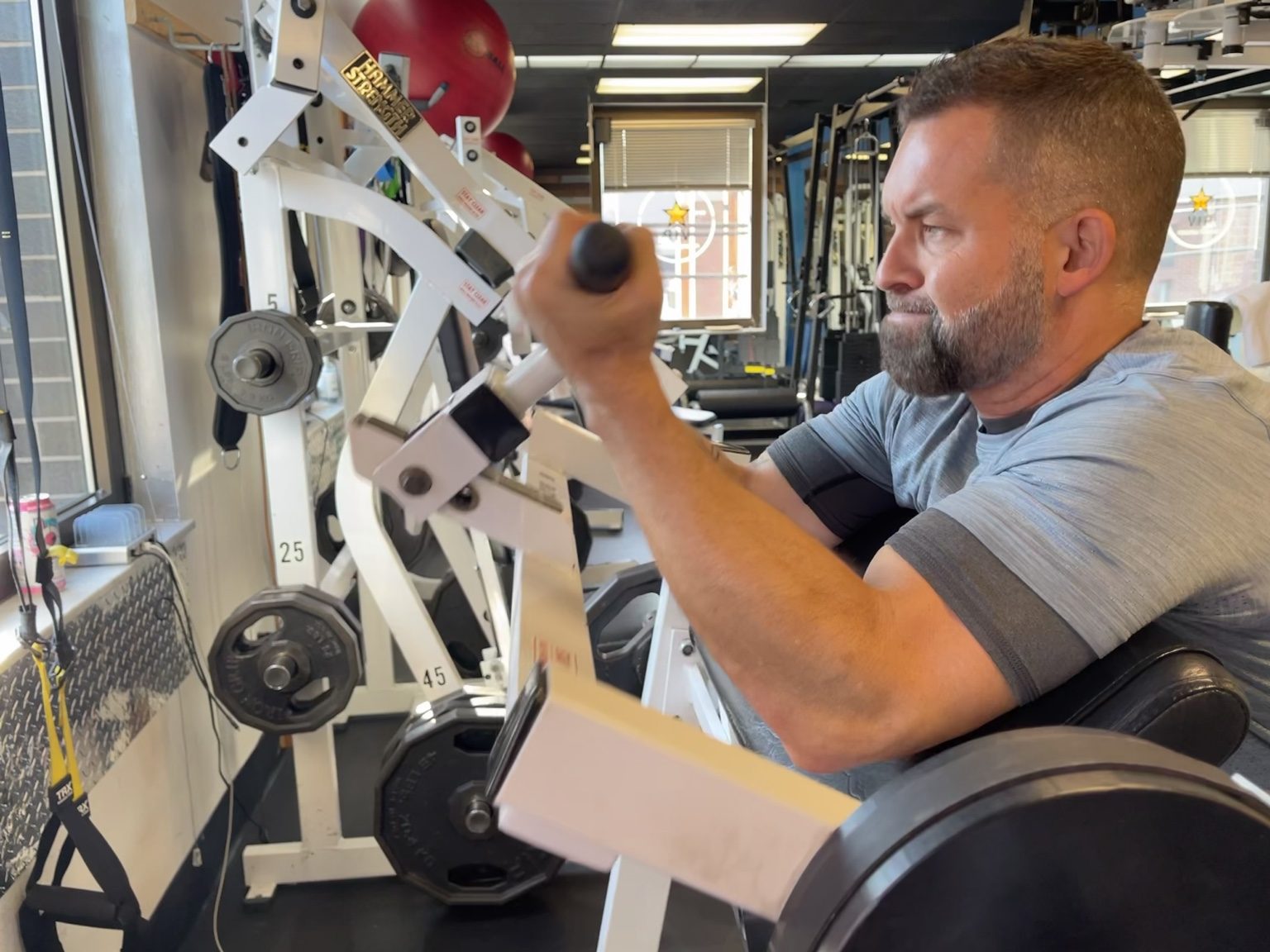
Close view of a man curling the handles of a preacher curl machine.

Not seeing results at the gym does not automatically mean you need harder workouts or more appointments. First check what you are measuring, how consistently you are training, whether your exercises are progressing, and what is happening between sessions. Use the seven checks below to choose a sensible next step instead of changing everything at once.

At VIP Fitness Center in Fort Lee, we offer 30-minute, one-to-one personal training. This guide is a starting point for reviewing your routine, not a diagnosis of why a particular person is struggling.

1. Define the Result You Are Trying to Measure

“Nothing is working” is difficult to investigate. “I want to increase my rowing strength” or “I want to reduce my waist measurement” gives you something specific to review. Those are different goals, and success on one measure does not prove success on another.

Next step: Write down your main goal, your starting point, and the date you began tracking it. For strength, compare the same exercise, resistance, repetitions, and technique. For a body-composition goal, discuss a suitable combination of measurements rather than relying on one number. For everyday fitness, choose a repeatable activity that matters to you, such as walking your usual route more comfortably.

2. Count Completed Sessions, Not Planned Sessions

Look at your actual attendance over the last four weeks. For example, planning twelve sessions but completing eight means you attended about 67% of the intended appointments. That is an illustration, not a client case study or a score of how hard someone tried.

Next step: Note why sessions were missed. A recurring work conflict calls for a scheduling solution before a more demanding program. Review our two-day versus three-day strength-training guide to compare realistic commitments. A third session can be useful when it fits the person; it is not a substitute for resolving the obstacles to attending.

3. Check the Training Log Before Adding Weight

Can you explain what changed across your last few sessions? Record exercises, sets, repetitions, resistance, and how demanding the work felt. Repeating suitable exercises can make comparisons clearer; a different workout every visit is not automatically a better program.

Next step: Ask whether the current workload matches your goal and abilities. An illustrative progression is completing the same exercise with an additional controlled repetition before considering a small load increase. Keeping the load steady while learning technique may also be appropriate. You do not need a personal record at every appointment.

The American College of Sports Medicine’s 2026 guidance for healthy adults emphasizes regular participation and individualized training. It also reports that training to momentary muscle failure did not consistently improve outcomes for the average healthy adult. Appropriate effort matters, but exhaustion is not the objective of every session.

4. Review Recovery Before Assuming You Need More Intensity

Write down recent sleep patterns, unusually demanding workdays, and how you feel entering each session. These notes give your trainer more context than “the workout felt harder.” The CDC includes sleep and stress management alongside nutrition and activity in a healthy weight-management approach.

Next step: Discuss whether to maintain, reduce, or progress the current workload. Do not label persistent fatigue as “overtraining” based on a checklist. New pain, recurrent dizziness, or unexplained fatigue deserves medical guidance rather than a recommendation to push through.

5. Look at Nutrition and Movement Outside the Gym

A training log does not show your whole week. For a few typical days, note meals, drinks, general activity, and schedule disruptions. Include a weekend day when it differs from your weekdays. This is information gathering, not a reason to blame yourself or begin an extreme diet.

Next step: Choose one realistic habit to discuss, such as planning a regular meal or adding a manageable walk. The CDC recommends tracking habits and setting specific, achievable goals; medicines and medical conditions can also affect weight management. Seek individualized nutrition advice from a registered dietitian when needed. Skip food tracking if it increases anxiety or reinforces disordered eating, and ask for appropriate support.

For general health, CDC adult activity guidance includes at least 150 minutes of moderate-intensity aerobic activity weekly, or an equivalent vigorous-activity combination, plus muscle-strengthening work on at least two days. These are general targets to build toward, not a promise of weight loss or a requirement to add the whole amount immediately.

6. Make Sure Your Measurements Are Comparable

Before interpreting a change in body-composition readings, check the testing conditions. InBody notes that food, fluids, recent exercise, and time of day can affect results, and recommends consistent preparation for repeat tests. Follow the manufacturer’s testing guidance and ask about any restrictions relevant to you.

Next step: Use the same device and comparable conditions for follow-up tests, then consider the trend alongside training records and other relevant measurements. Do not treat one small scan difference as proof that you gained muscle or lost fat. Equally, an unchanged scale does not by itself prove either failure or body recomposition. A fitness assessment is not a medical diagnosis.

7. Set a Review Date, Not a Transformation Deadline

Agree on when to review the plan and what evidence to bring. A four-week check-in, for example, can be used to assess attendance, exercise records, and whether your routine is manageable. It is not a promise that your body will look different in four weeks.

Next step: Decide whether to keep the plan, adjust one element, or seek a different kind of assessment. If training records are improving but your main goal is not, acknowledge both findings. Do not dismiss the goal, but do not discard useful progress either.

What Should You Change First?

Use the information you have collected to choose the next conversation. These are illustrative situations, not guaranteed explanations:

  • You keep missing the same appointment: Address the calendar conflict before adding another training day.
  • You attend consistently but have no training records: Establish a simple log so that exercise decisions are based on more than memory.
  • Your performance is declining and you feel unusually fatigued: Review workload and recovery, and seek medical guidance when symptoms are persistent or unexplained.
  • Two InBody tests were taken under different conditions: Standardize the next comparison before making major changes based on the scan alone.

For a practical first week, bring your recent notes to your trainer, select one manageable change, and agree on a review date. Changing training frequency, diet, exercises, and daily activity simultaneously can make it harder to identify what helped.

Frequently Asked Questions

Should I buy more sessions if I am not seeing results?

Only when there is a clear reason for the additional coaching or training time and it fits your schedule and recovery. First establish whether the issue is attendance, programming, another habit, or the way progress is being measured.

Do I need to replace my whole workout?

Not automatically. Start by identifying what is and is not working. Your coach may keep useful exercises, adjust their workload, or change the plan when there is a specific reason. Novelty alone does not explain whether a routine fits your goal.

Can an InBody assessment tell me exactly why progress has stalled?

No. It adds body-composition information, but cannot establish the cause by itself. Consider it alongside your history, goals, training, and relevant medical advice rather than treating the scan as a complete answer.

Discuss Your Starting Point at VIP Fitness Center

Our Free Body Diagnostic is a complimentary 30-minute consultation that includes an InBody body-composition assessment and a conversation about your fitness goals, current routine, and schedule. Bring your questions and any recent training notes you would like to discuss.

VIP Fitness Center provides private, 30-minute personal training at 1620 Lemoine Ave, Suite 2, Fort Lee, NJ 07024 — upstairs, serving clients from Ridgefield and nearby communities. The consultation is separate from ongoing training appointments and carries no obligation to purchase.

Book your Free Body Diagnostic and discuss an appropriate next step.

This article is general fitness education, not individualized medical advice. Training needs and results vary.


2-Day vs. 3-Day Strength Training for Busy Adults

For a busy adult starting or returning to strength training, two full-body sessions per week are a practical starting option. A third session can provide another opportunity to practice movements and spread out training, provided it fits your schedule and recovery. Start with what you can attend consistently, not the most demanding plan you can imagine completing.

At VIP Fitness Center in Fort Lee, our 30-minute, one-to-one personal training provides a focused coaching option. Here is how to compare two-, three-, and four-day schedules without confusing more appointments with automatically better results.

What Does a Workout Split Mean?

A workout split is simply how you distribute exercises across the week. In a full-body routine, each session includes work for the lower and upper body. An upper/lower split separates those areas into different sessions. Neither label tells you whether the exercise selection, workload, or coaching suits you.

The CDC recommends muscle-strengthening activity for all major muscle groups on at least two days per week, alongside aerobic activity. That is a general health guideline, not a promise that any two workouts will meet every strength or muscle-building goal.

The American College of Sports Medicine’s 2026 resistance-training guidance also emphasizes consistent participation and tailoring training to individual goals. The practical takeaway: choose a schedule that lets you complete appropriate work regularly, then adjust it as your needs change.

Choose Two Days When You Need a Manageable Starting Commitment

A two-day plan is worth discussing when you are new to training, returning after time away, or balancing work and family commitments. An illustrative schedule is Tuesday and Friday, with both sessions covering upper- and lower-body exercises.

Two 30-minute sessions mean 60 minutes of scheduled coaching each week, before travel and changing time. Over four weeks, that is eight appointments to protect in your calendar. Look at the actual coming month: can you realistically attend those times?

The trade-off is less total appointment time for exercise practice and additional work. Prioritize the movements most relevant to your goals rather than trying to squeeze a long gym routine into every session.

Choose Three Days When the Extra Session Solves a Real Problem

An illustrative three-day schedule is Monday, Wednesday, and Friday. Each visit can remain full-body while the emphasis and workload change. Not every session needs to be equally demanding.

A third appointment may make sense when two days are already reliable, you are tolerating the current routine, and your coach identifies a reason for more weekly practice or training. It may also be an appropriate starting schedule for someone whose goals, experience, and availability support it; two days are not a mandatory first stage.

Three 30-minute sessions total 90 minutes of scheduled coaching per week: 30 minutes more than a two-day plan and 50% more appointments. That does not mean 50% better results. It is a larger time commitment, and the cost difference depends on your package.

What Could a 30-Minute Session Include?

The following is an illustrative structure, not an individualized workout prescription or a fixed VIP protocol:

  • First 5 minutes: A brief check-in and an appropriate warm-up.
  • Next 22 minutes: A small number of selected strength exercises, including instruction and adequate rest.
  • Final 3 minutes: Record the session, discuss how it felt, and confirm the next step.

Possible exercise choices include a squat to a box, a cable row, an appropriately inclined push-up, a hip hinge or bridge, and a suitable trunk exercise. This is a menu of examples, not a requirement to complete every exercise. A coach selects the versions, resistance, repetitions, and number of sets for the person.

The important limit is that 30 minutes is not an excuse to remove necessary rest or hurry unfamiliar movements. More advanced lifting, extensive technique work, or a larger exercise workload may require a different session structure or additional training time.

How to Progress Without Just Adding More Days

Record the exercise, resistance, repetitions, and how challenging the sets felt. Before increasing anything, ask whether the current movement is being completed consistently with the intended technique.

For example, a coach might keep the same exercise and resistance while a client practices a controlled set of eight repetitions. When that becomes manageable, the next step could be another repetition or a small load increase. This is an illustration of progression, not a requirement to increase something every visit.

When progress stalls, review attendance and the existing program before adding another appointment. Someone who regularly misses one of three scheduled sessions may benefit more from a dependable two-day plan than from a fourth day on paper.

When Does a Four-Day Upper/Lower Split Make Sense?

A possible schedule is upper body on Monday and Thursday, with lower body on Tuesday and Friday. Wednesday separates the two pairs of training days.

Four days may suit someone whose goals require more weekly work or who prefers dividing training into smaller sections. It is not automatically the best next step for a beginner. It also creates more travel and scheduling demands, even when each appointment is short.

What Should You Do Between Strength Sessions?

Walking or another suitable aerobic activity can complement your strength work. CDC adult activity guidance includes at least 150 minutes of moderate-intensity aerobic activity weekly, 75 minutes of vigorous activity, or an equivalent combination. Start with manageable amounts when inactive; the target does not have to be reached immediately.

Strength-training appointment time should not automatically be counted as meeting that entire aerobic goal. Discuss the full week with your trainer, including other activities, rest, and anything your clinician has advised.

Frequently Asked Questions

Should a beginner start with two or three days?

Consider two when it provides a realistic commitment. Consider three when you can reliably attend and tolerate the additional work. Your starting point, exercise selection, and weekly workload matter more than choosing a number in isolation.

What happens when I miss a workout?

Discuss an appropriate adjustment with your trainer instead of doubling the next workout automatically. A missed day is a reason to adjust the plan, not a reason to abandon it or punish yourself with extra exercise. Any appointment changes remain subject to your booking and cancellation terms.

Will either schedule guarantee weight loss?

No schedule guarantees a specific weight change. Discuss your broader activity, nutrition, and health context rather than judging the plan only by the scale.

What if I have pain, an injury, or a medical condition?

The examples here may not be suitable. Tell your trainer about relevant restrictions and seek individualized medical guidance when needed. A fitness consultation does not diagnose an injury or provide medical clearance.

Choose a Starting Plan at VIP Fitness Center

Your Free Body Diagnostic is a complimentary 30-minute fitness consultation that includes an InBody body-composition assessment and a conversation about your goals, starting point, and schedule. It is separate from ongoing training appointments.

Visit VIP Fitness Center at 1620 Lemoine Ave, Suite 2, Fort Lee, NJ 07024 — upstairs. We offer 30-minute private personal training; VIP Personal Fitness’s semi-private and small-group programs are downstairs in Suite 1.

Book your Free Body Diagnostic to discuss which training frequency fits your week. No obligation. Individual needs and results vary.


Starting GLP-1 Treatment and Exercise: Questions for Your First Weeks

Starting prescribed weight-management medication is a reason to coordinate your exercise plan with your healthcare team, not automatically begin harder workouts. People differ in symptoms, treatment response, current activity, and medical restrictions.

At VIP Fitness Center in Fort Lee, exercise coaching can complement your care. Trainers do not choose medications, adjust doses, or determine whether a medication reaction is harmless.

Before Your First Workout

Ask your prescribing clinician whether you have activity restrictions, what side effects to watch for, and how to respond if you cannot eat or drink normally. Tell your trainer about relevant guidance and your recent exercise experience. Share information necessary for safe coaching without feeling obligated to disclose unrelated medical details.

For a specific example of medication information, the FDA’s Wegovy announcement describes gastrointestinal effects, dizziness, fatigue, and low-blood-sugar concerns with certain other medicines. These details should not be generalized to every prescription; use your medication’s current instructions and your clinician’s advice.

Choose a Manageable Starting Session

An introductory workout could focus on a few appropriate movements with instruction and enough rest. It might be lighter or shorter than your eventual routine. A familiar, tolerable session gives you useful feedback; a demanding workout is not a test of whether treatment is working.

A trainer might choose supported lower-body work, a row, and an appropriate press, but the selections depend on the person. Do not follow a generic exercise list when symptoms or restrictions make it unsuitable.

Use a Brief Check-In Before Each Visit

Consider whether you have been able to eat and drink, whether you feel dizzy or unusually weak, and whether your clinician has changed any advice. Tell your trainer before exercising. The appropriate decision may be to modify, postpone, or seek medical advice—not simply finish the planned session.

Persistent vomiting, inability to keep fluids down, severe abdominal pain, fainting, or other concerning symptoms require prompt medical guidance; severe symptoms may require emergency care. Do not dismiss them as normal adjustment or use this article to change your dose.

Build a Routine Around Tolerance

Agree on a schedule you can realistically attend. Our two-day and three-day schedule comparison can support that discussion, but it is not a prescription for someone starting medication.

Record what exercises you completed and how they felt. Adjust the plan in response to those observations and medical guidance rather than promising a fixed first-month transformation.

Keep Nutrition and Medical Follow-Up in the Plan

Reduced appetite can make meal planning more complicated. Ask a registered dietitian or your clinician about adequate intake and any fluid restrictions. Do not combine treatment with a crash diet or assume that a protein shake replaces a varied diet.

For additional context, read what lean-mass measurements can and cannot tell you. Strength, everyday function, nutrition, and medical monitoring deserve attention alongside weight.

Discuss Exercise Options in Fort Lee

VIP Fitness Center offers 30-minute private training. Book your Free Body Diagnostic at 1620 Lemoine Ave, Suite 2, Fort Lee, NJ 07024 — upstairs. The complimentary consultation includes an InBody assessment and a discussion of fitness goals; it is not medication management or medical clearance.


Losing Fat While Preserving Muscle: A Practical Training Plan

Preserving muscle during weight loss is a goal, not something a workout or diet can guarantee. A useful plan considers resistance exercise, adequate nutrition, recovery, and changes in strength as well as body weight.

Separate Your Goal From the Measurement

Weight, fat mass, lean mass, and strength describe different things. A lower scale reading does not tell you which tissues changed. An unchanged reading does not prove muscle gain either. Agree on a small set of measures you can compare meaningfully.

A practical review could include a training log, body weight when appropriate, and standardized body-composition assessments. Ask about the limitations of each measure before treating it as a verdict.

Keep Strength Work in the Conversation

Rather than automatically replacing strength sessions with more cardio, discuss a balanced exercise plan. The exact frequency and workload should reflect your starting point and recovery. Compare realistic schedules in our two-day versus three-day training guide.

For example, a coach may retain familiar exercises so you can compare resistance, repetitions, and technique. If performance declines, review workload, intake, illness, sleep, and medical factors instead of assuming a harder session is needed. This is a decision process, not a promise of preventing every loss in lean tissue.

Avoid Diet Changes You Cannot Sustain

Choose an eating approach that meets your nutritional needs and fits your circumstances. The CDC’s weight-management guidance emphasizes achievable habits and recognizes that medications, health conditions, sleep, and stress can influence weight.

Do not use dehydration, meal replacement by a single food, or severe restriction to accelerate the scale. Persistent weakness, dizziness, or difficulty eating is a reason for healthcare advice rather than an instruction to be more disciplined.

Make Protein Advice Specific to the Person

Our protein guide includes a worked calculation and food-planning examples. It also explains why medical conditions and other circumstances can require a different target. A registered dietitian can individualize intake rather than relying on a generic number from a fitness website.

Review the Plan, Not Just the Scale

At an agreed review point, ask: Were the sessions completed? Are familiar movements still manageable? Is the eating plan adequate and realistic? Were repeat measurements comparable? Change an identified problem instead of changing everything at once.

For help organizing that review, use our seven progress checks. Those taking prescribed weight-management medication should continue medical follow-up; exercise is complementary care, not a replacement.

Get a Fitness Starting Point

Explore 30-minute, one-to-one training at VIP Fitness Center. Book your Free Body Diagnostic at 1620 Lemoine Ave, Suite 2, Fort Lee, NJ 07024 — upstairs. The consultation is complimentary, carries no purchase obligation, and is not a medical diagnosis. Individual results vary.


Strength Training Beyond Weight Loss: Five Useful Goals to Track

Strength training can be worthwhile even when weight loss is not your goal. Choose outcomes that matter in your daily life, then use consistent measurements to see whether your program is helping.

1. Make a Familiar Task More Manageable

Choose a task such as getting up from a chair or carrying a suitable load. Describe what currently makes it difficult. A coach can select relevant exercises, but an exercise resembling the task is not a guarantee that it will solve pain or a medical limitation.

For example, compare the same sit-to-stand setup over time rather than changing chair height every week. Use support and professional guidance when needed.

2. Learn an Exercise You Previously Avoided

A useful goal might be learning how to set up a rowing machine, perform an appropriate squat variation, or control a resistance exercise. Record what instruction helped and what still feels uncertain. Skill practice is progress even before the resistance increases.

3. Increase a Specific Strength Measure

Compare the same exercise with a similar range of motion, repetitions, and setup. The ACSM resistance-training guidance supports tailoring training to the outcome you want rather than assuming one routine serves every purpose.

Our progression guide explains how to make a small change without treating every session as a personal-record attempt.

4. Build a Routine That Fits Your Week

Attendance is a process measure, not a health guarantee. Still, it helps you determine whether the plan is realistic. Count completed appointments and the reasons for changes. Address a recurring scheduling conflict rather than interpreting it as a lack of motivation.

5. Support a Broader Health Plan

The CDC describes health benefits of regular physical activity, including benefits beyond body weight. Exercise remains one component of care, not a substitute for recommended screening or treatment.

For bone-related questions, read our bone-health guide. A stronger lift or an InBody result does not establish a change in bone density.

Keep the Review Honest

At your review, identify which measures changed and which did not. Do not claim a posture correction, improved hormones, pain cure, or longer lifespan from an individual workout log. Agree on the next adjustment based on the outcome you are actually tracking.

VIP Fitness Center provides 30-minute, one-to-one training in Fort Lee. Book a Free Body Diagnostic at 1620 Lemoine Ave, Suite 2 — upstairs—to discuss goals beyond the scale. The consultation is complimentary; individual needs and results vary.


How Exercise Enhances the Results of GLP-1 Weight Loss Medications

GLP-1 medications can be part of a clinician-directed weight-management plan. Exercise has a different job: developing physical capacity, practicing movement, and supporting a sustainable routine. The two approaches can complement each other rather than compete.

For adults in Fort Lee, Englewood Cliffs, and nearby Bergen County communities, the practical question is not whether medication or exercise is better. It is how to build an appropriate exercise routine around your health, goals, and medical care.

Medication Can Have Heart Benefits, Too

It would be inaccurate to say that weight-loss medication cannot improve cardiovascular health. The FDA approved Wegovy (semaglutide) injection to reduce cardiovascular death, heart attack, and stroke risk in adults with established cardiovascular disease and overweight or obesity, alongside a reduced-calorie diet and increased physical activity. That is a specific indication for a specific medicine and patient group, not a claim about every weight-loss drug or every person taking one. Read the FDA announcement and the population it applies to.

Those medical benefits do not replace learning how to lift, improving exercise capacity, or practicing movements used in everyday life. Your prescribing clinician manages medication; a trainer helps you perform and progress appropriate exercises.

What Research Says About Combining Exercise and Treatment

In a randomized trial of adults with obesity who had first lost weight through a supervised dietary program, combining exercise with liraglutide produced a larger reduction in body-fat percentage than either approach alone. The combination also preserved lean mass and improved cardiorespiratory fitness. The trial studied liraglutide and a specific exercise program; it does not establish identical results for all medications or guarantee an individual outcome. See the original trial published in the New England Journal of Medicine.

The coaching takeaway is to look beyond the number on the scale. Discuss strength, everyday function, and exercise tolerance with your care team as well as changes in body weight.

Strength Training: Build an Appropriate Starting Point

General adult activity guidance includes muscle-strengthening work for all major muscle groups on at least two days per week. This is a public-health target, not an individualized prescription for someone starting or changing medication. Your starting workload may need to be lower, with adjustments for symptoms, experience, and medical guidance. See the CDC adult physical activity recommendations.

An illustrative beginner session might include a supported squat or sit-to-stand, a rowing exercise, a suitable pressing movement, and basic trunk work. Exercise selection, resistance, repetitions, and rest should fit the person; completing the list is not more important than tolerating the session well.

Muscle retention is a goal, not a guarantee. Do not assume that lifting weights eliminates all lean-tissue loss or prevents every change in energy needs during weight loss. Nutrition and medical follow-up remain important parts of the overall plan.

Add Aerobic Activity at a Manageable Pace

Walking, cycling, or another suitable aerobic activity can complement strength sessions. The CDC recommends at least 150 minutes of moderate-intensity aerobic activity per week, or an equivalent vigorous-activity combination, alongside strengthening work. People who are inactive can begin with smaller amounts and build gradually; some activity is better than none.

A practical starting discussion is whether a short walk on a non-training day feels manageable. Increase activity based on tolerance and professional guidance, rather than treating a weekly target as something you must achieve immediately.

Adjust Training When Appetite or Energy Changes

Nausea, vomiting, dizziness, and fatigue are among the side effects reported with Wegovy. Persistent symptoms, difficulty keeping fluids down, or difficulty eating enough warrant contact with your prescribing clinician rather than advice to push through a workout. People also taking insulin or medicines that stimulate insulin release should discuss low-blood-sugar precautions with their clinician. The FDA safety information explains these concerns.

Tell your trainer about relevant exercise restrictions and how you feel that day. A session may need to be reduced, changed, or postponed. A registered dietitian can help individualize food and protein intake; a fitness article cannot replace that assessment. Do not change medication doses or stop treatment based on this article.

A Clear Role for Your Trainer and Your Care Team

Your clinician handles prescribing, side effects, and medical monitoring. Your trainer can help with exercise technique, an achievable schedule, and progression within your abilities and any medical restrictions. Use training records and how daily activities feel to inform conversations about progress, without treating them as medical tests.

Explore Private Training in Fort Lee

VIP Fitness Center offers 30-minute, one-to-one personal training at 1620 Lemoine Ave, Suite 2, Fort Lee, NJ 07024 — upstairs. Coaching is tailored to your goals and starting point; it is not medication management.

Book your Free Body Diagnostic to discuss your fitness goals, schedule, and training options. The complimentary visit includes a fitness consultation and InBody body-composition assessment. It is not a medical diagnosis, medical clearance, or a substitute for your care team’s advice.

This article provides general fitness education. Exercise and treatment needs differ, and results vary.


Personal Training vs. Working Out Alone: Which Fits Your Needs?

Working out independently can be effective. Personal training adds coaching and structure, but it is worth paying for only when those services solve a problem that matters to you. Compare the actual support, time commitment, and cost—not a promise that hiring a trainer guarantees faster results.

When Independent Training Makes Sense

You may prefer independent workouts when you understand the exercises, can plan appropriate sessions, and reliably follow your routine. Greater scheduling flexibility and lower coaching costs are legitimate advantages.

The responsibility is yours to choose suitable exercises, keep records, and recognize when something needs professional attention. An online routine can be useful, but its suitability depends on its content and your circumstances—not simply whether it came from the internet.

When a Trainer May Add Value

Coaching may be useful when you are unsure how to start, need feedback on movements, struggle to organize a program, or prefer an appointment-based commitment. Ask what the trainer will actually do: explain exercise choices, observe technique, document relevant progress, and adapt the plan.

Those are services, not guaranteed outcomes. A trainer cannot prevent every injury, ensure attendance, or diagnose the cause of pain. Medical conditions and rehabilitation restrictions may require coordination with a healthcare professional.

Compare the Full Commitment

Count appointment time, travel, and the cost of the package. Also ask about cancellation terms, how scheduling works, and what support is included. Do not compare a 30-minute coached appointment with an uncoached gym visit as though they are the same product.

At VIP Fitness Center in Fort Lee, our service is 30-minute, one-to-one personal training, not a gym-only membership. Review our two-day versus three-day schedule guide before deciding how many appointments fit your life.

Questions to Ask Before Buying

Ask how the trainer will learn about your starting point, what a session might include, how progress will be reviewed, and what happens when a movement is unsuitable. Confirm qualifications and relevant experience rather than assuming a title establishes expertise in every condition.

A useful answer should describe a process rather than offer a dramatic transformation deadline. For example, the trainer might explain how exercises and workload are selected; a promise to fix every problem is less informative.

You Do Not Have to Treat the Options as Enemies

Some people combine coached sessions with appropriate independent activity. Others prefer more coaching or greater independence. The best arrangement is one that fits the person and can be evaluated honestly.

The ACSM guidance recognizes that effective resistance exercise can use different equipment and settings. A studio is a way to access support, not the only place exercise can work.

Compare Your Options at VIP

Book your Free Body Diagnostic to discuss goals, schedule, and training options. Visit VIP Fitness Center at 1620 Lemoine Ave, Suite 2, Fort Lee, NJ 07024 — upstairs. The complimentary 30-minute consultation includes an InBody assessment and carries no purchase obligation. It is not medical clearance or a guarantee of results.


Lifting Technique and Weight: How to Choose the Right Challenge

Good training is not a contest between perfect form and heavy weight. The exercise, technique, resistance, and workload need to fit the person and the goal. A heavier load is not automatically wrong, and a light load is not automatically suitable.

Know What the Exercise Is For

Ask which movement you are practicing and what the coach wants you to control. An instruction should help you perform the chosen exercise—not make you fear every variation in posture. Body proportions, equipment, experience, and clinical restrictions can change the setup.

The ACSM’s guidance for healthy adults recognizes that effective resistance training can use different equipment and approaches. No single machine or universal stance is mandatory for everyone.

Use a Repeatable Setup

Before a set, check the equipment adjustment, your support points, and the intended movement. For a cable row, for example, note the seat position, handle, and resistance. These details make the next session easier to compare.

Ask for one clear cue at a time. If you do not understand it, request a demonstration or a different explanation rather than guessing while adding weight.

Choose Resistance You Can Use as Intended

A starting set can help establish whether the selected load permits the planned repetitions and movement. If the task changes substantially as fatigue builds, discuss whether to stop the set, reduce resistance, or change the exercise.

This is not a requirement to make every repetition identical or to avoid all effort. It is a way to keep the exercise aligned with its purpose. Pain, dizziness, or other concerning symptoms should not be treated as ordinary technique problems.

Progress Without Rushing the Decision

Record the exercise, load, repetitions, and relevant coaching notes. When the current task is manageable, the next step might be another repetition or a small load change. Improving familiarity can also justify holding the load steady.

See our progressive-overload guide. Slowing every repetition or shortening every rest period is not automatically better; the choice should serve the goal.

What a Trainer Can—and Cannot—Do

A trainer can observe, explain, and adapt exercises. They cannot guarantee injury prevention or diagnose the cause of pain from the appearance of a movement alone. Bring relevant medical restrictions and seek clinical assessment for persistent or concerning symptoms.

At VIP Fitness Center, 30-minute private sessions provide focused coaching. Book a Free Body Diagnostic at our Fort Lee studio, 1620 Lemoine Ave, Suite 2 — upstairs—to discuss your starting point.


Strength Training and Bone Health: What Exercise Can and Cannot Do

Resistance exercise can support bone health, but it is not the only useful activity and does not replace osteoporosis assessment or treatment. A suitable program may combine strengthening, weight-bearing activity, and balance practice.

Three Different Exercise Roles

The National Institute of Arthritis and Musculoskeletal and Skin Diseases describes resistance training, weight-bearing exercise, and balance training as complementary approaches. Weight-bearing activities include walking, dancing, and stair climbing; resistance work can use bands, weights, machines, or body weight. Balance work addresses another part of fall prevention.

It is therefore inaccurate to say all cardio does nothing for bones. Swimming and cycling differ from weight-bearing activities, even though all can have a place in an overall activity plan.

Start With Your Risk and Medical Advice

If you have osteoporosis, low bone density, a previous fragility fracture, or other limitations, discuss exercise selection with a healthcare professional. A program suitable for a healthy adult may need significant modification for someone with fracture risk.

Ask about movements to modify, lifting restrictions, balance support, and whether a physical therapist should guide the initial plan. Share relevant instructions with your trainer. Do not assume a particular squat or deadlift is suitable simply because it appears in an online example.

Build a Practical Weekly Mix

Consider which activities fit your life: an appropriate strengthening appointment, a manageable walk, and supervised balance practice where indicated. The right combination depends on your health and current ability, not a universal list of exercises.

For a beginner, a coach might start with supported movements and a clear space. Balance exercises should not become a fall hazard; use stable support and appropriate supervision. Increasing challenge is a planned decision, not an obligation at every visit.

Know What the Measurements Mean

A strength improvement is useful but does not establish that bone density increased. An InBody body-composition assessment is not a diagnostic bone-density test. Your clinician decides whether bone-density testing or treatment is needed and how to interpret it.

Track exercise attendance, confidence with suitable tasks, and the workload you tolerate. Keep medical bone-health monitoring separate from fitness progress measures. No short program can promise a specific bone-density change or eliminate fracture risk.

Coordinate Fitness Coaching With Care

VIP Fitness Center provides 30-minute private personal training in Fort Lee. For general starting ideas, read our strength-training-after-40 guide; clinical restrictions take priority over general examples.

Book a Free Body Diagnostic to discuss fitness goals and training options at 1620 Lemoine Ave, Suite 2, Fort Lee, NJ 07024 — upstairs. The consultation is not a bone-density test, medical clearance, or osteoporosis treatment.


Consistency vs. Intensity: Why Your Fitness Plan Needs Both

Showing up regularly matters, but attendance alone does not tell you whether a workout fits your goal. Likewise, a demanding workout is not a complete long-term plan. Use consistency to establish a routine and appropriate intensity to make the sessions purposeful.

Define What You Can Repeat

Look at your actual schedule rather than your ideal week. Include travel, changing time, family responsibilities, and recovery. Two realistic appointments can be a better starting commitment than a longer plan you repeatedly miss; three or more may fit another person.

Compare the options in our two-day versus three-day schedule guide. No appointment count guarantees an outcome.

Define What Each Session Is Trying to Accomplish

An introductory technique session, a strength-focused session, and aerobic conditioning have different purposes. The amount of effort should reflect that purpose and your starting point—not a rule that every workout must feel equally hard.

The ACSM guidance emphasizes individualized resistance training. Completing a session with useful work and appropriate rest is more informative than judging it solely by sweat or exhaustion.

Use Two Separate Questions at Review

First, did you attend and complete the intended work? Second, is that work moving the relevant measures in the desired direction? A good attendance record with no progress calls for program review, not simply praise for showing up.

Conversely, if sessions were frequently missed, determine why before deciding the program itself failed. A schedule issue and a workload issue need different responses.

Build an Alternative for Disrupted Weeks

Agree on what to do during travel or an unusually busy period. An alternative might be a shorter familiar routine or a different available appointment. Illness, injury, or severe fatigue may call for rest and medical guidance rather than a backup workout.

Do not double the next session as punishment for a missed day. Appointment changes remain subject to your booking terms.

Measure the Plan Without Moral Judgments

A training record is information, not a measure of personal worth. Note the exercises, workload, and how the session felt. Use our seven-check review when the next adjustment is unclear.

VIP Fitness Center offers 30-minute private coaching in Fort Lee. Book your Free Body Diagnostic to discuss a realistic commitment at 1620 Lemoine Ave, Suite 2 — upstairs. The consultation is complimentary and carries no purchase obligation.