
Brian Hernandez

Brian Hernandez is the owner of VIP Fitness Center and a personal trainer in Fort Lee, New Jersey. He helps adults build practical fitness routines through 30-minute, one-to-one personal training, with an emphasis on appropriate exercise selection, clear coaching, steady progression, and consistency.

His articles explain how to choose a training program, understand fitness assessments, and make informed decisions about strength training, scheduling, and long-term progress. VIP Fitness Center's private training studio is upstairs at 1620 Lemoine Ave, Suite 2, Fort Lee.

Brian writes from an exercise-coaching perspective. His articles provide general fitness education, not medical diagnosis, treatment, or individualized medical nutrition advice.

Military-Inspired Fitness: Borrow the Structure, Not the Exhaustion

Military-Inspired Fitness: Borrow the Structure, Not the Exhaustion

A civilian fitness program should be designed for your goals and current abilities—not copied from an elite military selection challenge. Discipline can mean following an appropriate plan, recovering, and reporting symptoms rather than pushing beyond pain.

Do Not Use an Old Blog as a Qualification Standard

Military entry and selection requirements can change. Applicants should obtain current standards and preparation guidance directly from the relevant service and qualified recruiting personnel. This article is not an official Navy SEAL preparation plan or an affiliation with the military.

The earlier list of timed qualification requirements has been removed rather than presented as a current authoritative standard.

Start With Your Own Objective

Choose what you want to improve: a suitable strength task, aerobic capacity, or consistency with a routine. An objective that makes sense for a specialist candidate may not make sense for a busy adult beginning exercise.

Our measurable-goal guide explains how to connect a goal with a useful starting measure and review.

Use Structure Without Copying the Workload

Plan appropriate exercise days, record the work, and include time to recover. Combining repeated hard runs, swims, calisthenics, and loaded marches can create a very different demand from a general fitness routine.

Do not add a weighted backpack, breath-hold swimming, or training through sleep deprivation simply because it resembles a selection challenge. Swimming requires suitable skills and supervision; never use underwater breath-holding contests as a toughness test.

Distinguish Effort From Warning Signs

Challenging work and concerning symptoms are not interchangeable. New pain, dizziness, confusion, or severe weakness should prompt stopping and appropriate medical attention. Heat and exhaustion should not be used to override judgment.

Our workload-review guide explains why more is not automatically better. No civilian client needs to prove that they can ignore pain to deserve coaching.

Choose Ordinary Tools for a Purpose

Appropriate pushing, pulling, lower-body exercises, and aerobic activity can form a useful plan without military branding. The CDC’s adult activity guidance provides a general health framework; individualized goals may require different programming.

VIP Fitness Center offers 30-minute private personal training. Book a Free Body Diagnostic at 1620 Lemoine Ave, Suite 2, Fort Lee — upstairs—to discuss a plan for your needs, not a promise of military readiness.


Digestive Symptoms and Gut Health: What to Note and When to Seek Care

Digestive Symptoms and Gut Health: What to Note and When to Seek Care

Bloating, a change in bowel habits, or digestive discomfort can have several explanations. They do not, by themselves, diagnose a bad microbiome, yeast overgrowth, or a condition that a cleanse will fix.

Describe the Symptom Precisely

Note when it began, how often it happens, what changed, and any medicines or supplements you use. Include whether the symptom affects eating, sleeping, or activity. These observations can help a clinician decide what evaluation is useful.

The NIDDK explains that gas can be normal and describes when bothersome or changing symptoms should be discussed with a healthcare professional.

Avoid Diagnosing From Unrelated Signs

A craving for sweets does not prove that yeast is controlling your appetite. A skin problem, depression, or an autoimmune diagnosis is not simply a symptom list for one universal gut imbalance.

The earlier article’s broad claims that the wrong microbes inevitably cause malnutrition or that a food list heals all gut problems have been removed. Research on the microbiome should not be stretched into a diagnosis from an online checklist.

Know When to Get Help

Seek medical advice for persistent or changing symptoms, especially with unintentional weight loss, blood in stool, ongoing diarrhea, or recurrent vomiting. Severe sudden abdominal pain, vomiting blood, fainting, or other emergency symptoms need immediate medical care.

Do not postpone evaluation while repeatedly eliminating foods or trying a detox. A symptom can improve temporarily without establishing its cause.

Discuss Food Changes Individually

Some people benefit from changes to particular foods or fiber intake, but automatically adding large amounts of garlic, onion, or fermented products can be unsuitable. A registered dietitian can help when a restricted or medical diet is being considered.

NCCIH explains that probiotic effects depend on the product and condition. A supplement is not automatically required after every antibiotic course. Do not stop prescribed antibiotics or other treatment from this article.

Coordinate Exercise With How You Feel

Tell your trainer when digestive symptoms affect a session. Modification or postponement may be appropriate. Exercise coaching does not diagnose the microbiome or replace gastrointestinal care.

VIP Fitness Center provides private personal training in Fort Lee. A Free Body Diagnostic at 1620 Lemoine Ave, Suite 2 — upstairs—introduces fitness options, not gut testing or treatment.


Burpees: Choose a Suitable Variation or a Better Alternative

Burpees: Choose a Suitable Variation or a Better Alternative

A burpee combines several movements and can be demanding. It is not the single best exercise for every person, a complete training program, or a guarantee of weight loss. Decide whether the movement fits your abilities and the purpose of the session.

Separate the Parts Before Combining Them

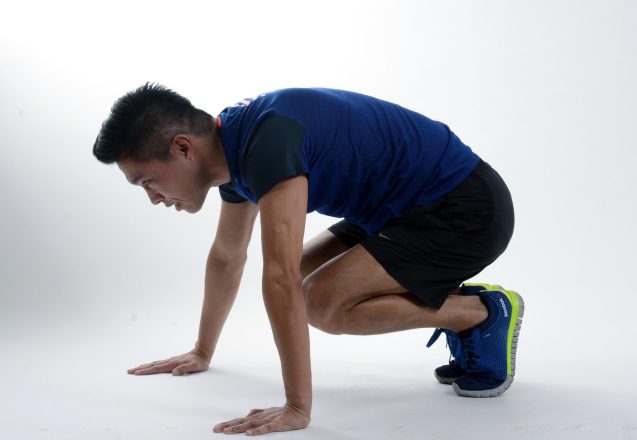
Common versions involve lowering toward the floor, moving the feet into a supported plank position, bringing them back, and standing. Some add a push-up or jump. Those additions increase or change demands and are not compulsory.

A person who cannot comfortably support weight through the hands or move between standing and the floor may need another exercise rather than the standard version.

An Illustrative Step-Back Option

With appropriate instruction, a modified version may use a stable elevated surface that cannot slide or tip. Place the hands on it, step the feet back one at a time to a manageable supported position, step forward, and stand under control.

This is a general example, not a prescription for wrist, back, shoulder, or balance problems. Choose a surface and range that fit the person, and omit the movement when it is unsuitable.

Do Not Use Speed to Hide Lost Control

Start with a small amount of practice and enough rest. A timer should not pressure you to add a push-up, jump, or faster transition before you can manage the task.

Stop for pain, dizziness, or other concerning symptoms. Our exercise-form questions can help you discuss a suitable alternative.

Keep the Claims Realistic

A burpee can involve several muscle groups, but it does not train every movement pattern equally or replace appropriate pulling and other strength work. Sweating during it does not prove fat loss, and the exercise is not a blood-pressure treatment.

The CDC adult recommendations describe a broader mix of activity. One difficult exercise should not be sold as covering every fitness need.

Choose an Alternative Without Feeling You Failed

Depending on the goal, separate supported squats, suitable presses, and manageable aerobic activity may be more appropriate. A trainer should explain why an exercise is selected, not require it as a badge of toughness.

VIP Fitness Center offers 30-minute private coaching. Book your Free Body Diagnostic at 1620 Lemoine Ave, Suite 2, Fort Lee — upstairs—to discuss an appropriate starting plan.


Beginner Strength Training: What to Learn in Your First Sessions

Beginner Strength Training: What to Learn in Your First Sessions

Your first strength sessions are an opportunity to learn suitable exercises, understand the equipment, and establish a manageable workload. You do not need a special light-weight fat-burning routine or a guarantee about how your body will look.

Tell the Coach What You Want to Improve

Discuss goals, previous activity, relevant injuries or restrictions, and your available schedule. Building strength, learning exercises, and pursuing a body-composition goal overlap but are not identical objectives.

Neither sex nor a fear of becoming bulky should be used to assign everyone the same program. Individual preferences and response matter.

Learn a Small Number of Appropriate Tasks

A first session may use a suitable squat or sit-to-stand, a row, a press, and other selected movements. The exact menu depends on the person. You do not need to complete every major exercise on the first visit.

Ask how to adjust the equipment, start and finish the movement, and choose a manageable resistance. The ACSM guidance recognizes useful training with several types of equipment rather than one compulsory tool.

Use a Warm-Up and Enough Rest

Easy movement and lighter practice of the planned exercises can help you prepare. A warm-up is not a guarantee against injury, and a short appointment should not eliminate necessary instruction or rest.

If a movement causes concerning symptoms, stop and ask for appropriate assessment rather than assuming discomfort proves that it is working.

Record What You Did

Note the exercise version, resistance, repetitions, and a useful cue. Comparable records make the next decision clearer. A small load increase or another repetition may be appropriate later; maintaining the workload while learning is also valid.

Our progression guide explains the process without requiring a personal record every visit.

Choose a Realistic Frequency

Compare your goals and recovery with the time commitment. Our two-day versus three-day guide includes examples. There is no universal 48–72-hour rule that diagnoses healing from every exercise or injury.

Bring persistent pain, unusual fatigue, or other concerning symptoms to a healthcare professional. Exercise coaching has a different role.

Start With a Conversation at VIP

VIP Fitness Center provides 30-minute private personal training. Book a Free Body Diagnostic at 1620 Lemoine Ave, Suite 2, Fort Lee — upstairs—to discuss goals and starting options. The consultation is complimentary and carries no purchase obligation.


Stay Motivated When Fitness Progress Is Not Yet Obvious

Stay Motivated When Fitness Progress Is Not Yet Obvious

Early training can feel uncertain when you do not yet know what progress should look like. Use a realistic plan and useful feedback rather than waiting for a dramatic visual change to prove the effort matters.

Choose an Early Learning Goal

You might aim to understand a machine setup, complete the agreed appointments, or learn how to record a session. These are process goals, not promises of a particular body change.

A trainer can help clarify what to review. Do not assume every person will see visible results after exactly one or two months.

Make the Initial Workload Manageable

Starting with repeated all-out sessions can create an experience you do not want to repeat. The goal is appropriate practice and effort, not maximum soreness.

Our beginner guide explains what to learn before rushing progression. Pain or persistent unusual fatigue needs appropriate attention rather than a motivational push.

Use Measurements That Help Rather Than Distress You

Choose relevant measures and comparable conditions. Weight measurements are optional for some goals and may be unsuitable when they increase distress or disordered eating. There is no mandatory weigh-in frequency for every client.

Read our progress-review checklist before interpreting one scan or scale reading as proof of success or failure.

Protect a Realistic Appointment

Choose a time that usually fits and identify predictable conflicts. The same hour every day is not necessary when work or caregiving requires flexibility. A useful routine accounts for real life.

Communicate changes within your booking terms. Illness and medical concerns can justify postponement; an appointment is not a reason to ignore them.

Choose Useful Encouragement

Ask a coach or support person to notice a specific skill or help solve a practical barrier. Public body comparisons and guilt are not necessary forms of accountability.

Our consistency guide addresses what to do when motivation fades after the initial start.

Discuss Your Starting Plan

VIP Fitness Center offers 30-minute private coaching at 1620 Lemoine Ave, Suite 2, Fort Lee — upstairs. Book your Free Body Diagnostic to discuss goals and scheduling with no purchase obligation. Fitness progress and individual needs vary.


Can You Exercise Too Much? Review Workload, Symptoms, and Recovery

Can You Exercise Too Much? Review Workload, Symptoms, and Recovery

An exercise workload can exceed what a person is currently able to tolerate or recover from. The answer is not a universal maximum number of gym visits, and a symptom checklist cannot diagnose overtraining.

Count the Whole Workload

Include sports, physical work, travel, and other demands alongside planned workouts. Two sessions with the same duration can impose different demands depending on exercise selection, intensity, and experience.

Ask what each session is intended to accomplish. A schedule filled with maximum-effort work is not automatically more effective than a plan with varied demands.

Correct the Muscle-Repair Story

Muscle growth should not be described as accumulating scar tissue from repeatedly tearing the muscles. Likewise, a fixed 48–72-hour period does not establish healing from every injury or readiness for every workout.

The ACSM guidance emphasizes appropriate training choices for individual goals. Our rest-day guide explains how to review the next day’s activity without a rigid healing clock.

Take Persistent Changes Seriously

Declining performance, marked fatigue, sleep disruption, or a sustained change in resting heart rate can have several explanations. Discuss new or unexplained changes with a healthcare professional rather than asking a trainer to diagnose a hormone imbalance.

Severe muscle pain, unusual weakness, or dark tea- or cola-colored urine after exertion needs immediate medical evaluation. See MedlinePlus on rhabdomyolysis. Do not treat those signs as ordinary soreness to work through.

Consider Your Relationship With Exercise

Feeling unable to rest, exercising to compensate for eating, or training despite harm deserves support. More scheduling discipline may not address the issue. Seek an appropriately qualified professional when exercise becomes compulsive or distressing.

Make a Planned Adjustment

A coach may reduce the session demands, change the schedule, or postpone training while relevant concerns are assessed. Keep a record and agree on a review. A lighter week is not a guaranteed hormone reset or a diagnosis.

VIP Fitness Center provides 30-minute private training in Fort Lee. Book a Free Body Diagnostic at 1620 Lemoine Ave, Suite 2 — upstairs—to discuss fitness goals and an appropriate commitment. The consultation is not medical assessment or treatment of overtraining.


Natural Sweeteners and Sugar Substitutes: Compare the Actual Product

Natural Sweeteners and Sugar Substitutes: Compare the Actual Product

A natural label does not tell you whether a sweetener is calorie-free, suitable for your needs, or better than another option. Compare the ingredient and finished product rather than treating natural and artificial as health verdicts.

Separate Sugars From High-Intensity Sweeteners

Honey, maple syrup, and table sugar contribute sugars and energy. Certain purified stevia-derived ingredients and monk-fruit extracts can sweeten foods in much smaller amounts. A product may also blend these with other ingredients.

The FDA explains the different sweetener categories and their intended uses. Safety under intended conditions is not a promise that a product treats diabetes or causes weight loss.

Read the Whole Label

Check the serving size, carbohydrate information, other ingredients, and any warnings relevant to you. A product sold as monk fruit may include another sweetener; a sugar-free food is not necessarily calorie-free.

A homemade plant preparation is not automatically equivalent to a purified ingredient evaluated for a particular food use. Do not assume every form of stevia has the same regulatory status or evidence.

Consider Tolerance

Some people experience digestive symptoms with particular sweeteners or amounts, including some sugar alcohols. Notice the product and portion rather than concluding that all sweeteners damage everyone’s gut.

Ask a healthcare professional about persistent symptoms. Do not prescribe a sweetener as a way to increase bone density, lower blood pressure, or cure constipation.

Keep Medical Needs in the Conversation

People managing diabetes should consider the whole food and their individual treatment plan. Those with phenylketonuria need to follow relevant aspartame warnings. A fitness article cannot replace that advice.

Keep products away from children and pets and follow appropriate safety guidance. A human food’s natural origin is not a guarantee of safety for an animal.

Choose According to the Purpose

You may prefer less sweetness, a modest amount of sugar, or a suitable substitute. Fruit can add sweetness and other ingredients to a recipe, but changing the ingredient may also change moisture and texture.

Our carbohydrate guide explains why the overall pattern matters more than one label. You do not need a supplement-like sweetener to begin an appropriate fitness routine.

VIP Fitness Center offers private coaching. Book a Free Body Diagnostic at 1620 Lemoine Ave, Suite 2, Fort Lee — upstairs—to discuss exercise goals, not obtain medical nutrition treatment.


Medication Safety: Five Questions to Ask Your Clinician

Prescription medicines can provide important benefits and can also have risks. The useful question is whether a particular treatment is appropriate for you—not whether all medicines are harmful or all natural alternatives are safe.

This article replaces earlier, unsupported claims that pharmaceutical medicines are inherently damaging, rarely tested, or routinely best replaced by home remedies. Do not stop or change prescribed treatment because of a fitness article.

1. What Is This Medicine Intended to Do?

Ask what condition is being treated, what improvement to expect, and how it will be evaluated. The FDA explains that drug approval considers safety and effectiveness for an intended use. Approval does not mean a medicine has no adverse effects or suits every patient.

Bring the name and strength of the medicine to the conversation. Similar packaging or a familiar brand name is not enough to identify what you are taking.

2. How Long Should I Take It?

Some treatments are short term; others are appropriately continued for chronic conditions. Ask about follow-up and what to do if you miss a dose. Do not assume every drug should be discontinued as soon as you feel better.

3. Which Effects Need Attention?

Ask which symptoms can be monitored, which require a call, and which require emergency care. Record when a symptom began and any other changes. A symptom occurring after a dose deserves evaluation but does not, by timing alone, prove its cause.

4. Could It Interact With Something Else?

Bring a complete list of prescriptions, over-the-counter products, vitamins, and herbal supplements to your pharmacist or clinician. The NIH’s complementary-health safety guidance highlights interactions and product contamination as concerns. A plant-derived product can still affect medication safety.

5. Does It Change My Exercise Plan?

Ask about activity restrictions or symptoms relevant to exercising, then share that guidance with your trainer. A coach can adjust a session; they should not change your medication dose or diagnose a reaction.

Keep medicines in their labeled packaging and do not share a prescription. When cost is a concern, ask about appropriate alternatives rather than replacing treatment with an unverified remedy.

Where Fitness Coaching Fits

VIP Fitness Center provides 30-minute private exercise coaching in Fort Lee, not medical treatment. Our Free Body Diagnostic is a fitness consultation at 1620 Lemoine Ave, Suite 2 — upstairs; medication questions belong with your healthcare team.


Everyday Chemical Exposure: Practical Safety Without Fear-Based Claims

The words natural and synthetic do not, by themselves, tell you whether an exposure is dangerous. A useful safety question identifies the substance, how it is used, and the exposure involved rather than labeling ordinary life toxic.

This revision removes earlier unsupported blanket claims about conventional produce, food additives, packaging, and dairy. It does not declare every product harmless; it replaces broad allegations with practical checks.

Keep Produce in Perspective

Do not assume fruits and vegetables are only worthwhile when organic. Choose food that fits your needs and budget, then handle it safely. The FDA recommends rinsing produce under running water; soap or household cleaners should not be used on it.

Follow any preparation directions on packaged produce and keep perishable items appropriately refrigerated. An organic label does not replace food-safety practices.

Use Containers for Their Intended Purpose

Check whether a container is designed for the heat and food use you intend. Do not infer microwave suitability from its appearance or reuse damaged packaging indefinitely. When instructions are unclear, choose an appropriate food container with clear guidance.

Handle Household Products as Directed

Read cleaning and pesticide labels, use required precautions, and store products away from children and food. Never assume a natural product can be used without limits. Our cleaning-product safety guide explains why mixing products is not a shortcut.

Ask Better Questions About a Health Headline

Does the claim describe exposure in people or a laboratory experiment? Does it identify the amount and route? Does the study support the stated outcome, or is the headline making a larger leap? A chemical name alone is not an explanation of risk.

For a suspected exposure or poisoning, seek appropriate medical or poison-control advice. A detox drink, sauna, or extra workout is not a substitute for that evaluation.

Focus Your Fitness Effort on a Practical Plan

VIP Fitness Center offers 30-minute private training in Fort Lee, not toxin testing or detoxification. Book a Free Body Diagnostic to discuss exercise goals and scheduling, with no purchase obligation.


Natural and Homemade Cosmetics: Five Safety Checks

Natural, organic, and homemade are descriptions—not guarantees that a cosmetic is safe for every skin type. Evaluate the finished product and how it will be used instead of assuming one category is harmless and another is toxic.

This revision removes earlier claims that natural cosmetics have no adverse effects, suit everyone, and are automatically environmentally safe.

1. Check the Ingredients and Intended Use

Look for a complete label and directions. A food ingredient is not automatically suitable for the eyes, damaged skin, or prolonged skin contact. Ask a qualified professional about ingredients you have reacted to previously.

2. Consider Contamination

The FDA explains that cosmetic safety includes protection against contamination. Homemade mixtures do not bypass that problem. Do not assume removing preservatives makes a water-containing product safer.

Follow storage and use instructions, avoid sharing products, and do not improvise a long shelf life for a homemade preparation.

3. Separate a Marketing Claim From Evidence

Ask what a claim such as anti-aging or suitable for sensitive skin actually means. A natural label does not establish that a product will work for you. Price, attractive packaging, or a long ingredient story does not substitute for safety information.

4. Respond to Reactions

Stop using a product that causes irritation and seek professional advice when symptoms are significant or persistent. Severe swelling or breathing difficulty warrants urgent medical attention. Do not cover up a reaction with additional unfamiliar products.

5. Do Not Substitute DIY Products for Needed Protection or Treatment

Use products designed and labeled for their intended purpose. Do not rely on homemade mixtures as a substitute for prescribed skin treatment or tested sun protection. Questions about a persistent rash or lesion belong with a healthcare professional.

Keep Wellness Advice Within Scope

VIP Fitness Center’s service is exercise coaching, not dermatology or cosmetic formulation. For fitness planning in Fort Lee, our Free Body Diagnostic introduces the available training options without a purchase obligation.